


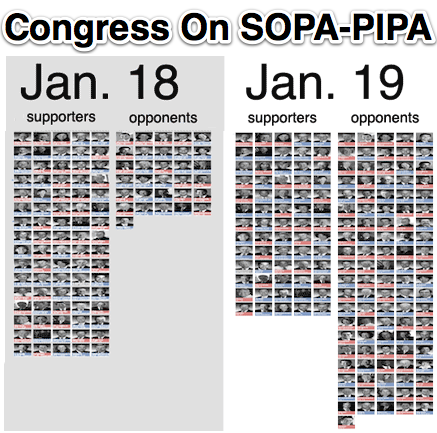
 March 2012 A childhood book told the story of Ooka Tadasuke, a famous judge in eighteenth-century Japan. A food-shop owner complained that a poor student ate plain rice while enjoying the shop's cooking smells. The owner wanted payment. The story makes an absurd claim vivid, but its vividness can also tempt us to treat every dispute over an intangible benefit as the same case. Was enjoying a smell really stealing? The question is memorable. Applying it to accusations by the RIAA and MPAA, however, requires an argument about the differences as well as the resemblance. A smell ordinarily escapes into shared air as a byproduct. A recording is deliberately made for an audience and distributed under arrangements meant to finance its production. Neither description decides every copyright question. It does explain why calling both intangible does not establish that the same property rule should apply. On a moon base, scented air might be sold by the liter. That imagined contract illustrates how circumstances matter, not why existing claims vanish whenever copying becomes cheaper. Property rules have changed, including rules concerning land that differ from those of hunter-gatherer societies. But change is not its own justification. A useful rule must account for reliance, incentives, access, and the costs it imposes on others. Its defensibility cannot be read directly from whichever technology has most recently arrived. [1] Slow legal change can frustrate a fast technical transition. [2] But the record labels' former control over distribution and networks' new ability to move data cheaply are only part of the story. Delivery is not production. A breathable atmosphere supplies air without someone having to compose it anew; a film requires resources before any copy can circulate. That difference weakens the analogy with a shop owner collecting rent on passing smells. New distributors should explain how their systems sustain creation rather than declare the earlier claims obsolete because enforcement has become inconvenient. Ownership is a useful fiction. The office fridge demonstrates what happens when several people become innovative about it at once. [a footnote wearing a tie] (Short-term executive incentives can encourage incumbents to protect current revenue instead of exploring better distribution. Equity can also encourage exclusion when control is profitable. The same problem can affect a new technology company seeking cheap access to other people's work. A diagnosis based on bonuses alone is therefore too convenient. Examine the actual incentives and proposed bargain: who pays for production, who takes the risk, and who captures the return when copying becomes nearly free?) People should be able to charge for content under defensible rules even when charging is technically difficult. Difficulty may justify changing the method or scope of protection; it does not itself extinguish the underlying claim. A defensible system must also avoid imposing disproportionate costs on everyone else. Laws that compromise general communications or burden innocent users deserve objection on that basis. But rejecting an enforcement measure is different from rejecting copyright. The test should compare workable alternatives, including licensed access and new forms of payment. A distributor's preference to avoid negotiating is no more decisive than an incumbent's preference to preserve every old revenue stream. Labels, studios, newspapers, and magazines faced different pressures as distribution changed. Neither aggressive litigation nor graceful decline is a complete measure of justice. A quieter collapse can still deprive creators of income; an assertive rights holder can still have a legitimate claim while choosing a poor remedy. Mass litigation and proposals that threaten the Internet can reveal serious failures of proportionality. They do not by themselves show that treating creative work as property cannot function. Reform should distinguish what is protected, which uses need permission, and what remedies fit an infringement. Otherwise a justified objection to punishment becomes an unsupported argument for unrestricted taking. Democratic opposition and disagreement among sovereign countries help expose excessive proposals. The response to SOPA illustrated the power of organized voters. But popular opposition should inform a better rule, not replace one. Both established rights holders and new intermediaries can organize political pressure. Multiple jurisdictions supply experiments and checks, while also creating uncertainty for people trying to publish and license work across borders. [3] Property is useful because people can rely on a claim long enough to plan, invest, and exchange. That reliability also constrains technological change: a new producer should first seek a way to operate under a defensible rule, then explain precisely why a revision would improve the shared arrangement. Neither international diversity nor democratic resistance ensures that the newest proposed definition creates more wealth. [4] An upgrade is a result to demonstrate, not a label that settles the dispute. Reform may be necessary, but its case should rest on evidence about creation and access, with attention to the expectations it overturns. Notes [1] Elizabeth Marshall Thomas's The Harmless People and The Old Way provide accounts of hunter-gatherer life. Such differences show contingency without deciding which modern rule is preferable. [2] Technology changes the possibilities for ownership and exchange. The relationship is reciprocal: reliable rights can support new technology by making investment possible. Faster invention therefore strengthens the case for clear procedures and careful transitions, rather than establishing that the definition of property should change at the same accelerating rate. [3] Myles Peterson used the phrase "copyright colony." Its force as a criticism should not obscure the separate question of which rights and remedies a country should adopt. [4] The history of the USSR shows why property arrangements can affect production and technical development. It does not show that any particular change to copyright will help or harm them. The lesson is to investigate incentives and institutional consequences before dismissing a rule as obsolete. Original acknowledgments to Sam Altman and Geoff Ralston for reading drafts of the original essay. |
|
 Japanese Translation |
|